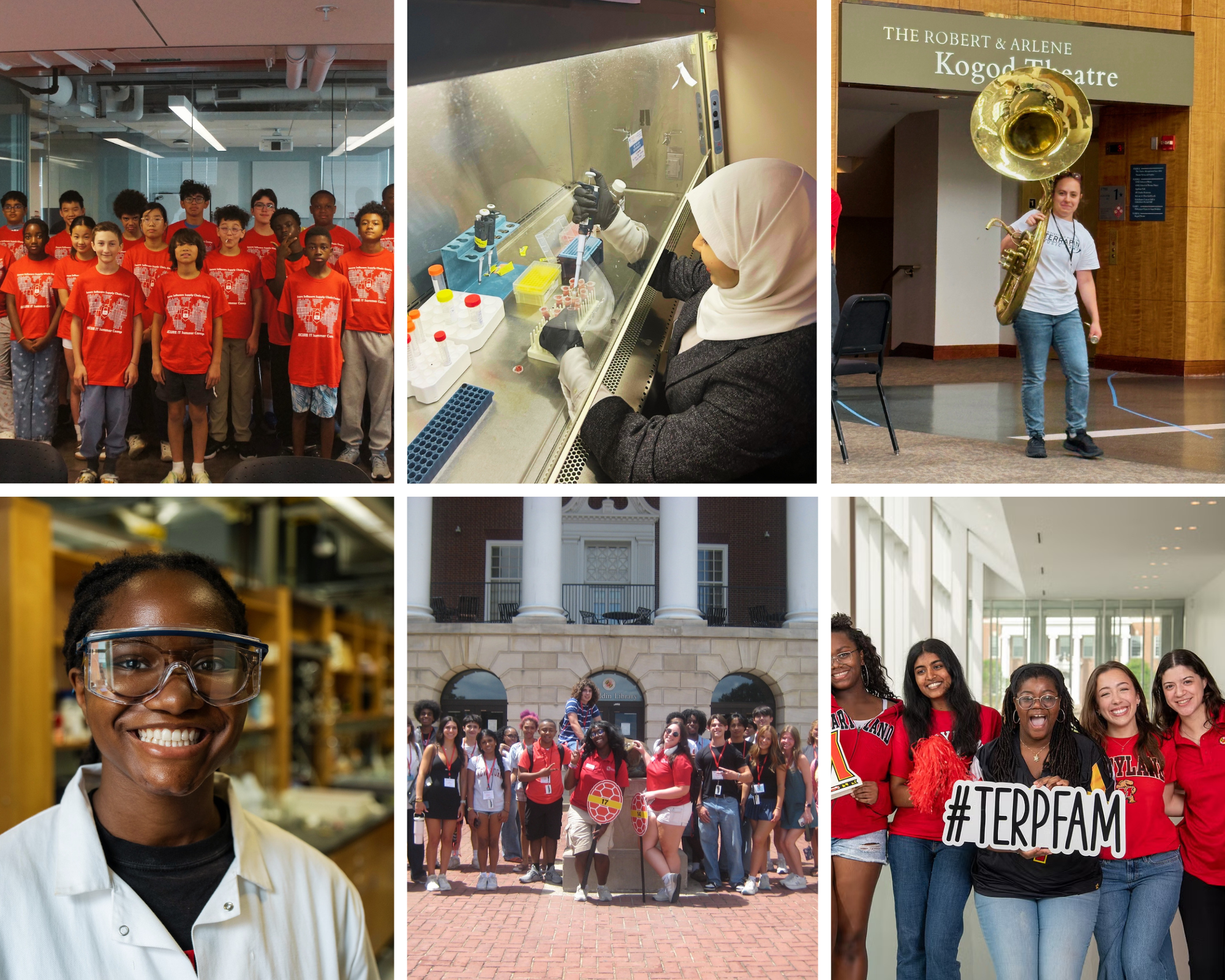

While many students headed home or traveled this summer, a handful of Honors Terps stayed on campus to teach, welcome new Terps, and pursue research. From cybersecurity camps and music rehearsals to orientation programs and laboratory benches, their work shows the many ways UMD students contribute to campus life year-round.
Shakira Ali ’29 and Gisele Mathew ’28 (ACES)
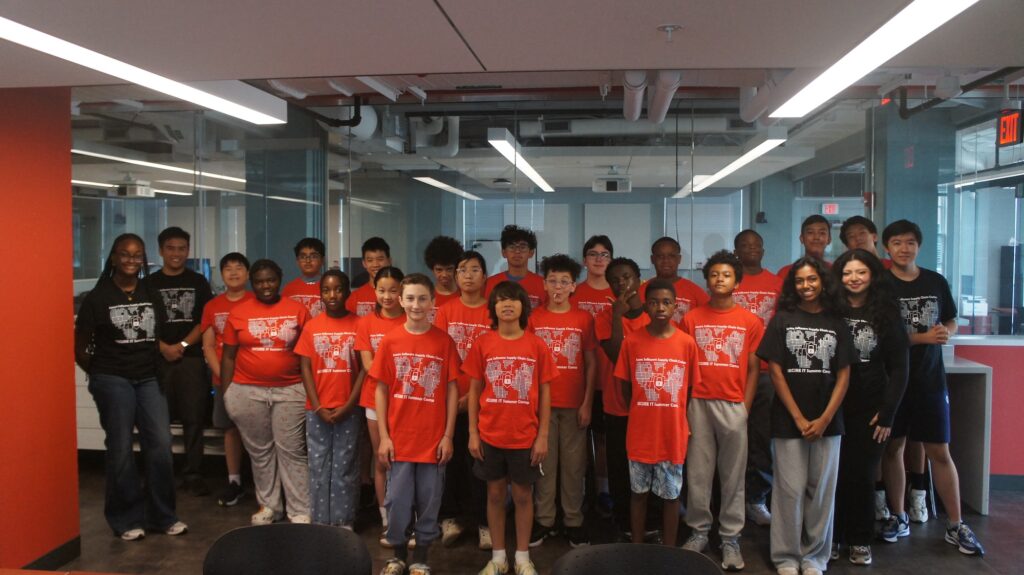
For ACES students Shakira Ali and Gisele Mathew, summer meant introducing middle school students to the fast-moving world of cybersecurity. As instructors with UMD’s Secure IT Summer Camp, the computer science majors helped create lessons, presentations, and hands-on activities for students ages 11-14. Their curriculum moved from cybersecurity fundamentals, digital ethics, and online safety to more technical topics such as networking, social engineering, Unix terminal navigation, and Bash commands.
Both Ali and Mathew found the campers’ excitement to be the highlight of the experience. Ali watched students who were initially new to the Unix terminal gain confidence navigating directories and running scripts. Mathew was excited to see students eagerly compete in a basketball-style review game that turned cybersecurity questions into a lively team activity. For both of them, hearing from parents that campers had begun imagining a future in cybersecurity was a powerful reminder of the impact of making technical learning accessible, active, and fun. Their ACES experiences helped prepare them not only with the technical knowledge to teach, but also with an emphasis on the real-world applications and ethical responsibilities of cybersecurity.
Alexa Hunleth ’27 (UH)
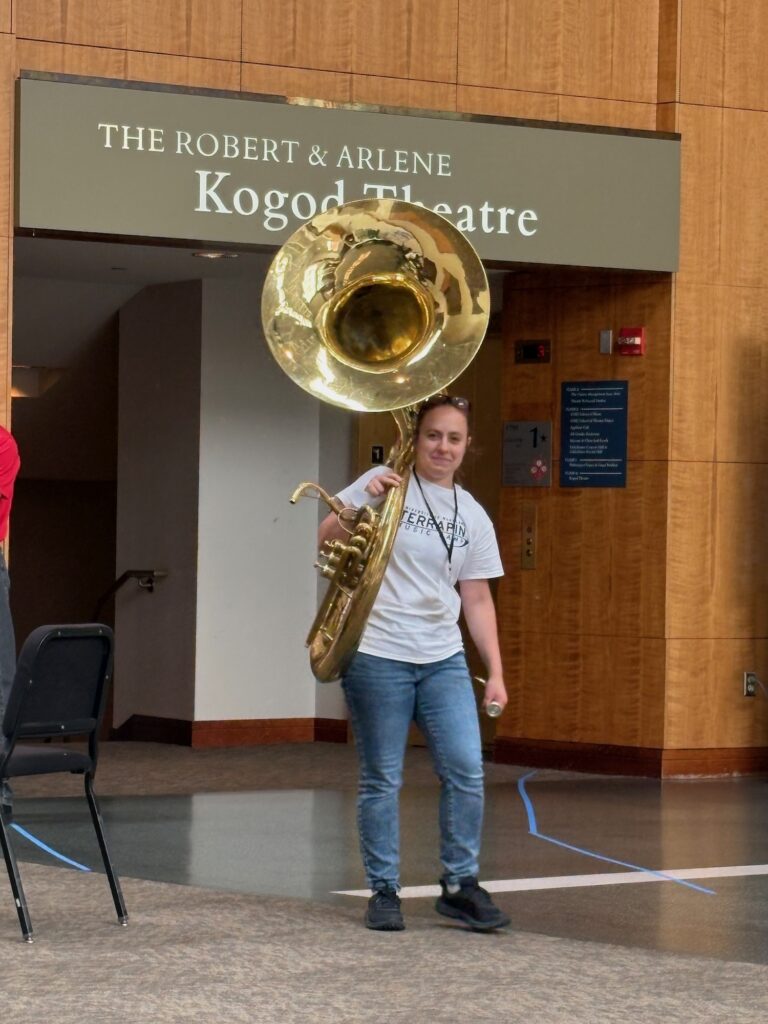
Music education and mathematics major Alexa Hunleth spent the summer at the Clarice Smith Performing Arts Center as junior faculty for Terrapin Music Camp. Working with high school band and orchestra students, Hunleth supported rehearsals, sectionals, and elective classes while also helping ensure campers felt connected, confident, and ready to have fun.
Hunleth especially enjoyed leading flute, oboe, and bassoon sectionals. This was a chance to build her teaching skills while getting to know young musicians individually. Camp life left room for creativity, too: for example, bassoonists experimented with adding paper to their instruments to extend their range to a low A. Hunleth says she was encouraged to take risks, whether that meant playing violin with the orchestra despite primarily being a flutist or teaching beginning oboe and bassoon to students trying new instruments.
Odesé Imhienintama ’29 (UH)
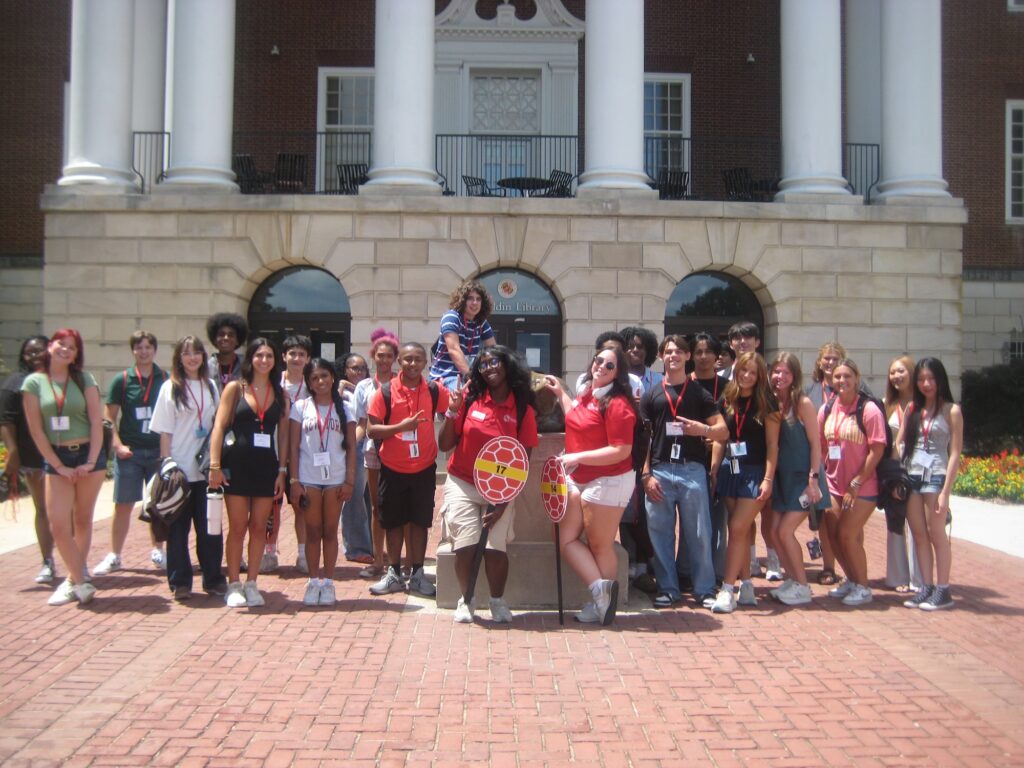
For Odesé Imhienintama, summer was all about first impressions. As an Orientation Advisor with the Office of Student Orientation and Transition, the hearing and speech sciences and human development major helped incoming students and their families begin their UMD journeys. Her work included guiding students through class registration, leading tours for family members and supporters, and facilitating programs designed to help new Terps feel informed and at home before the semester begins.
Each orientation group brought new personalities and dynamics, which Imhienintama says made every program unique. Although her academic homes are in the College of Behavioral and Social Sciences and the College of Education, she worked with the College of Computer, Mathematical, and Natural Sciences during orientation. She felt that UH helped prepare her for the role by connecting her with students across majors and colleges, which gave her stories and perspectives that she could share with the students she welcomed.
Makaila Hayes ’29 (DCC)
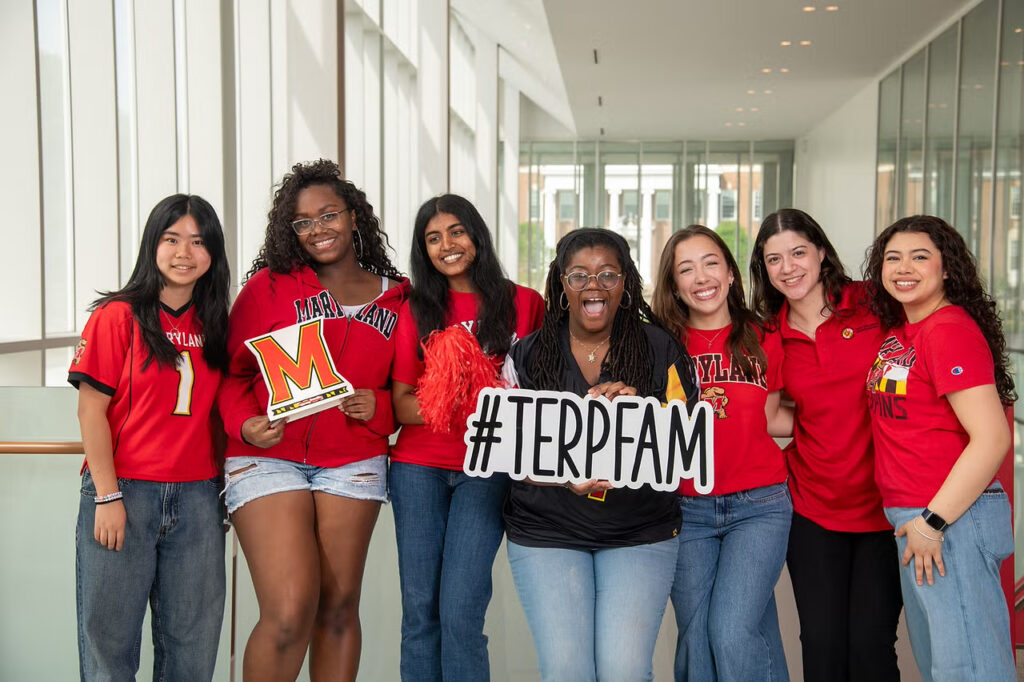
Nutrition and food science major Makaila Hayes also spent the summer helping new Terps find their footing as an Orientation Advisor. Through the Office of Student Orientation and Transition, Hayes worked with first-year students, transfer students and families, leading college-based student groups, participating in Q&A panels and creating opportunities for students to meet their future peers.
For Hayes, the most rewarding part was helping students move past the uncertainty that can accompany a major transition. In one particularly meaningful conversation, a parent shared concerns about her quiet daughter’s anxiety about starting at a large university. Hayes related her own experience of arriving at UMD from a high school graduating class of just 19 students, then offered practical reassurance about finding a supportive community. As a member of the DCC program, Hayes has seen firsthand how a smaller community within a large university can make campus feel more personal, and she encouraged incoming students to seek out clubs and events where they can do the same.
Jehan Idsassi ’28 (GEMS)
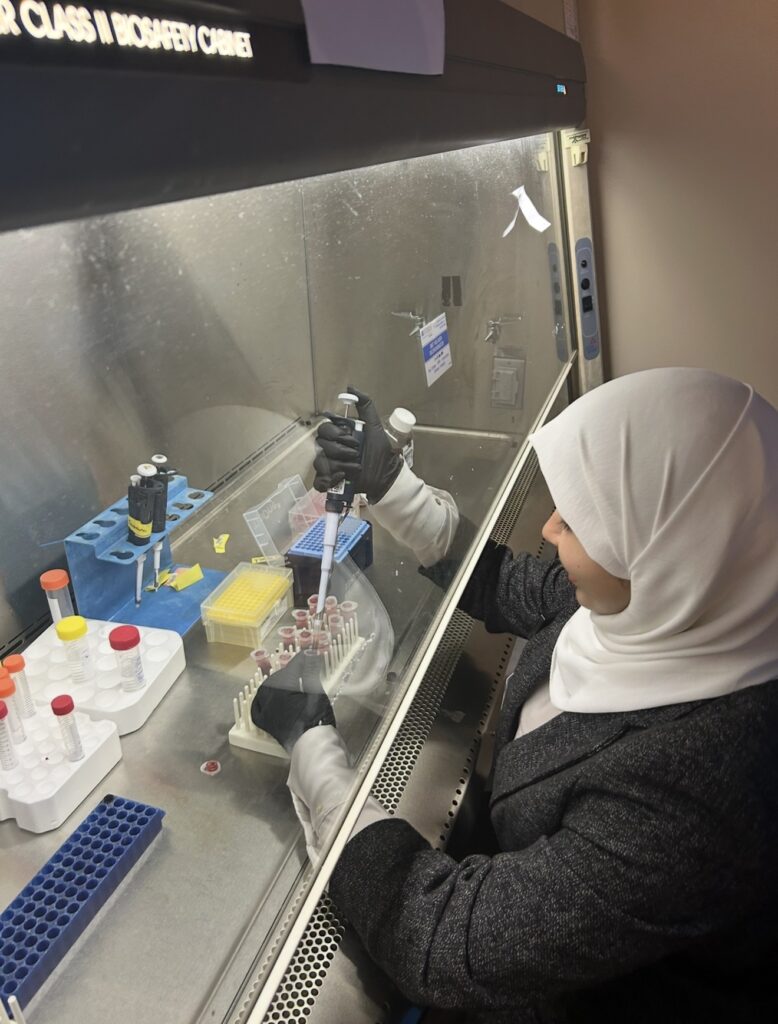
In Dr. Alix Berglund’s laboratory in the Department of Veterinary Medicine, neuroscience and history major Jehan Idsassi spent the summer investigating a question at the intersection of cancer biology and immunology. As an undergraduate research assistant, Idsassi studied how an ALK5 inhibitor affects TGF-β signaling in CaOV3 ovarian cancer cells, with the goal of understanding whether blocking that pathway can help immune cells better recognize tumors. Her work involved qPCR and flow cytometry techniques to examine changes in gene expression and cell-surface protein levels.
The experience was as much about learning how to think as it was about mastering laboratory methods. Idsassi values the chance to troubleshoot experiments, ask questions, and learn from experienced researchers. A standout moment came when Dr. Berglund gave her the autonomy to direct an assay using the CaOV3 cells—an opportunity that reinforced the importance of understanding the scientific reasoning behind each step, not simply following a protocol. Idsassi says her experience in the Gemstone program has strengthened her ethical grounding and commitment to research that can make a meaningful difference.
Mallory Striplin ’26 (ILS)
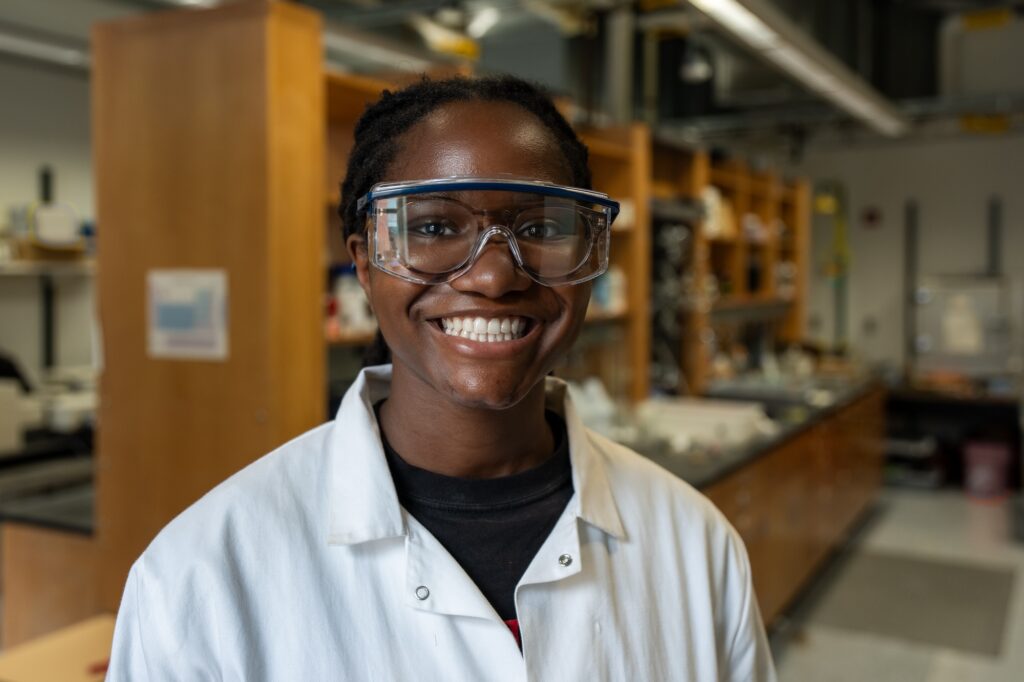
Chemistry major Mallory Striplin spent the summer in the Falvey Lab, an organic and photochemistry research group in UMD’s Department of Chemistry. As an undergraduate researcher, Striplin worked on synthesizing organic photosensitive compounds that can be used in photolithography for nanotechnology engineering. Her summer project centered on synthesizing 3-dimethylamino-9H-thioxanthen-9-one, a compound whose reactive intermediates require careful attention throughout the synthesis and purification process.
Striplin says the rewarding part of research is often found in its smallest victories: resolving a difficult step, refining a purification process, or realizing that a seemingly minor detail made all the difference. Her experience in the ILS program gave her the confidence to seek research opportunities early in college and helped her see her work as one part of a larger research process. In the lab, that perspective makes every incremental advance feel connected to the broader possibilities of science and technology.