
Most undergrads spend junior year navigating which clubs to join and which roommates to live with next year, but Integrated Life Sciences (ILS) student Lindsey Walter is weighing a much rarer decision: what to call the previously unknown bacterium they found in a rainbow trout gut.
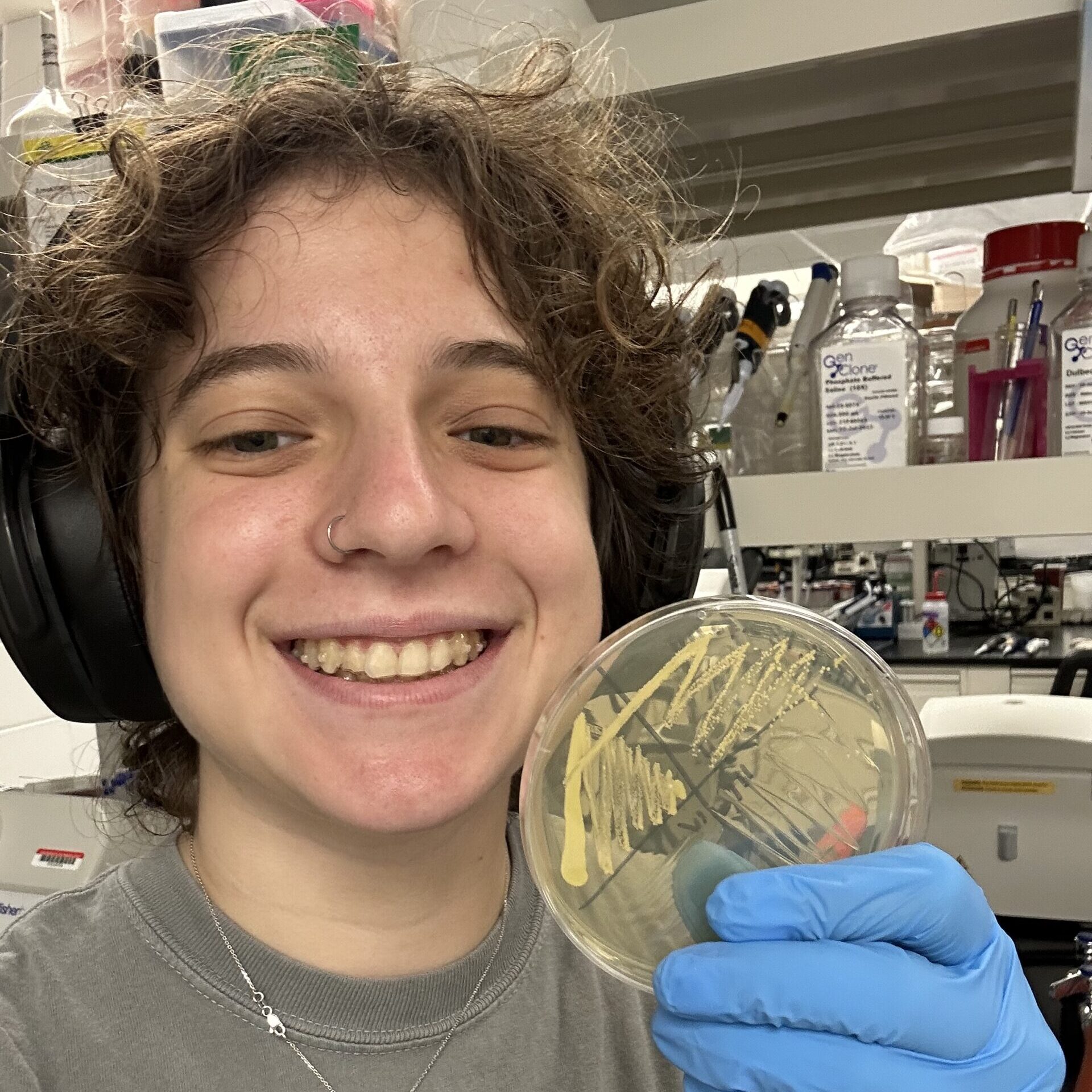
A microbiology major, Walter works in the Salem Lab in the Department of Animal and Avian Sciences, where the focus is on aquaculture and helping farmers raise bigger, healthier fish. One of the lab’s projects catalogs the gut microbiome of these food fish, which are raised for human consumption, to better understand how microbes influence fish growth and health. As part of a side experiment designed to isolate as many bacteria as possible from rainbow trout samples, Walter picked up something no one had seen before.
They isolated a bacterial species and sent it out for full genome sequencing, expecting it to match something in existing databases. Instead, the sequence came back with no perfect hits in a global database that compares DNA against every bacterial genome ever documented. Even the closest matches were too different to be considered the same species.
“When we got the sequencing results back, it was very complete, but there weren’t any hits anywhere,” Walter said. “Once we got the go-ahead that it was actually new, I got really excited.”
The new bacterium belongs to the genus Microbacterium, and for now, its role in the trout microbiome is still a mystery. It shows up only in low concentrations, doesn’t appear to be pathogenic, and early evidence suggests it may even produce some vitamins. Walter is now designing experiments to better characterize it, including microscopy work, enzyme assays, and tests of how it tolerates different pH levels.
“If there’s any way we can use it to make the fish healthier—and potentially the humans who eat them—that would be really meaningful,” they said.
The discovery has become the centerpiece of Walter’s upcoming Honors thesis research with biology professor Dr. Alexa Bely, which will propose an official species name and prepare the genome for international databases and a genome announcement publication. To meet the field’s strict nomenclature rules, Walter must not only choose an appropriate name but also thoroughly describe the organism’s traits for the scientific community.
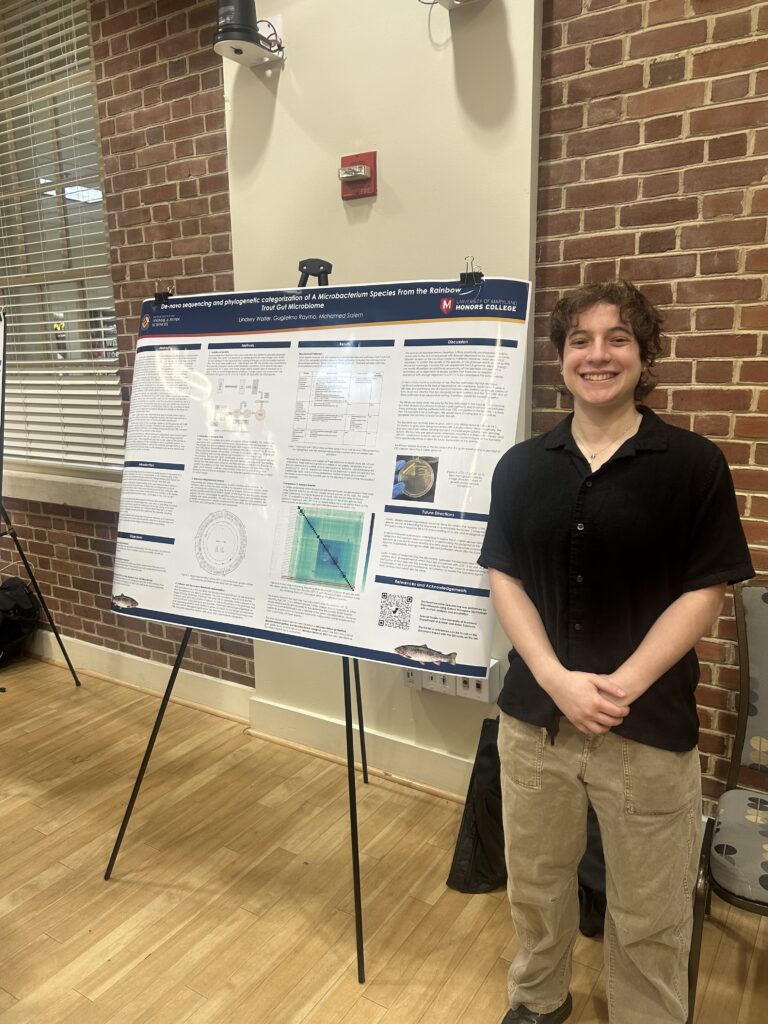
Walter traces much of their trajectory toward research-heavy work to their two years in the ILS program, especially mentors like Dr. Sabrina Kramer, who encouraged them to find a lab to work in. The program’s required research internship and close-knit community helped Walter narrow down which parts of biology they enjoy most and envision a career path that includes a PhD and, eventually, a professorship. They have already shared the microbe story at the winter Undergraduate Research Summit and will present a poster at Undergraduate Research Day this spring.
Watch this space, because we hope to be able to share the name of the new microbe soon!
—
The Integrated Life Sciences (ILS) Program provides a holistic, accelerated curriculum for talented STEM students, combining rigorous coursework, research requirements, service-learning experiences, and a supportive living-learning community to prepare students for successful careers in research, medicine, and education. Learn more about the ILS program at ils.umd.edu.